

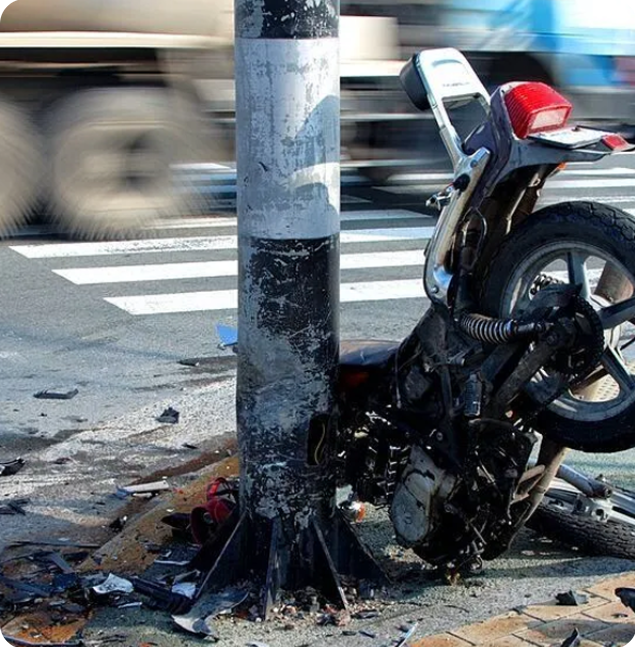
What should you do after a motorcycle accident in New York?
Quick answer: Get medical treatment immediately, call the police and obtain the accident report, photograph the scene, your bike and your gear, and avoid giving a recorded statement to the other driver’s insurer. One point specific to riders: motorcycles are excluded from New York’s no-fault system, so you will not receive basic economic loss benefits from your own policy — but you are also not held to the serious injury threshold before suing the at-fault driver. You have three years to file an injury claim (CPLR 214(5)).
Motorcycle accidents remain one of the most serious types of traffic collisions in New York. According to the National Highway Traffic Safety Administration (NHTSA), motorcyclists are much more at risk of suffering serious injuries than those who ride in a passenger vehicle, since they have less body protection during a collision. Even a split second’s carelessness can have life-changing implications in a city as busy as New York City, where congestion, distracted driving, erratic lane changes and reduced visibility are prevalent.
After a motorcycle accident, many injured riders are overwhelmed by medical treatment, insurance calls, lost income, and uncertainty about their legal rights. Unfortunately, insurance companies tend to rush to minimize the amount of the payout before victims are aware of the full scope of their injuries or medical requirements.
Knowing what to do immediately after a crash can help protect both your health and your ability to pursue compensation later. This is a step-by-step legal guide that outlines some of the most critical actions to take after a motorcycle accident in New York.
Step 1. Seek Medical Attention Immediately
Your first priority should always be your health and safety. If you think you have minor injuries, you should still receive medical attention right away.
Injuries often sustained in motorcycle accidents include:
- Traumatic brain injuries
- Concussions
- Spinal cord injuries
- Internal bleeding
- Fractures
- Road rash
- Neck and back injuries
There may be injuries that don’t show symptoms right away as a result of shock or adrenaline that came from the impact. If you subsequently file an injury claim, the record of prompt medical care will be important, as it will create an official record that connects you to the accident you were in.
Step 2. Call the Police and Request an Accident Report
Always contact law enforcement after a motorcycle crash in New York. A police report can prove to be good evidence to use in the insurance or legal process.
The responding officer may document:
- Driver and witness statements
- Traffic violations
- Road conditions
- Vehicle damage
- Preliminary observations about fault
When having a conversation with police officers, provide only facts but avoid commenting about fault or minimizing your injuries.
Step 3. Document the Accident Scene Carefully
Collect evidence at the scene if physically possible before the vehicles are moved.
Make sure that you get the photographs of all vehicles involved, damage to your motorcycle, skid marks or debris on the road, traffic signs or signals, visible injuries, and damage to your helmet or protective gear are all examples of important documentation.
Witness contact information should also be gathered and insurance information should be exchanged with the other driver. If there is any dispute regarding liability at a later time, strong evidence can help keep your side of the story alive.
Step 4. Be Careful When Speaking With Insurance Companies
Insurance adjusters may reach out to you immediately after the accident asking for statements or providing you with early settlements.
It is recommended to be careful.
Insurers will try to settle the claims as quickly as possible without knowing the full extent of the injuries and the long-term treatment costs. Avoid:
- Giving recorded statements without preparation
- Guessing about fault
- Downplaying your injuries
- Accepting fast settlement offers
A speedy settlement may not be sufficient to cover future medical treatment, rehabilitation and lost wages or other physical restrictions.
Speaking with a motorcycle accident attorney New York victims trust may help you better understand your rights before communicating extensively with insurers.
Step 5. Keep All Medical and Financial Records
Keeping a thorough documentation in a motorcycle injury claim is an essential step.
Some of the most important records are emergency room records, hospital bills, medical imaging results, physical therapy records, lost wage documentation, lost wage estimates, and motorcycle repair estimates. These records ensures a way to illustrate the financial and physical effects of the crash overtime.
Step 6. Understand Common Causes of Motorcycle Accidents in New York
Several motorcycle accidents take place because drivers fail to notice riders or fail to share the road safely.
Some of the common causes that lead to accidents include distracted driving, unsafe lane changes, failure to yield, speeding, drunk driving, left-turn collisions, and blind spot accidents. Because motorcycles are smaller and less visible than passenger vehicles, riders are sometimes unfairly blamed after accidents. Preserving evidence early can assist in establishing what actually happened.
Step 7. Know When to Contact a Lawyer
It is worth noting that not every motorcycle accident results in litigation, some situations need immediate legal attention.
You may want to contact a bike accident lawyer NYC riders rely on if:
- You suffered serious injuries
- Liability is disputed
- The insurance company delays payment
- A claim is denied
- Multiple vehicles are involved
- Long-term treatment is required
- You cannot return to work
Getting an experienced attorney can help you investigate the accident, gather evidence, communicate with insurers, and explain your legal options under New York law.
At Binson Law, motorcycle accident victims receive individualized legal attention focused on protecting their rights and pursuing compensation for both immediate and long-term losses. The firm’s motorcycle accident practice emphasizes confidential consultations, personalized support, and honest legal guidance without misleading promises.
Do Not Wait Too Long to Take Action
New York limits the time to file personal injury claims. In other situations, with public entities or government vehicles, important notice deadlines may apply much earlier.
The incidence of delay may also make it more difficult to maintain evidence, secure witnesses, and document injuries.
Final Thoughts
According to the Centers for Disease Control and Prevention (CDC), motorcycle crashes continue to result in thousands of serious injuries every year, many involving long recovery periods, permanent disability, or substantial financial hardship. The choices a rider in New York is faced with in the hours and days following a crash can have long-term implications on recovery and legal action.
After a serious motorcycle accident, preserving immediate medical attention, leaving evidence, avoiding hasty insurance settlements, and knowing your rights are all important steps to take.
If you or a loved one has suffered a motorcycle crash accident, contact Binson Law today for a free, confidential consultation. From insurance communications to disputed liability to serious injury claims, the motorcycle accident legal professionals at Binson Law offer personalized legal assistance to motorcycle accident victims in New York. Speak directly with an experienced Motorcycle Crash Lawyer New York riders can trust to protect their rights and help them move forward after a devastating accident.
Does no-fault insurance cover motorcycle riders in New York?
No. Motorcycles are excluded from New York’s no-fault scheme, so medical bills go to health insurance or into the claim against the at-fault driver. The trade-off is that riders do not have to meet the Insurance Law 5102(d) serious injury threshold before claiming pain and suffering, as car occupants must.
How long do I have to file a motorcycle accident claim?
Three years from the date of the crash (CPLR 214(5)), or two years for wrongful death (EPTL 5-4.1). A notice of claim against the City or MTA is generally due within 90 days (General Municipal Law 50-e).
Deadlines and legal rules summarised here have exceptions. Confirm the dates and rules that apply to your own case with an attorney rather than relying on a general summary.
See our motorcycle accident attorney New York page for detail on these claims, or our personal injury attorney New York page.